 prompt2bot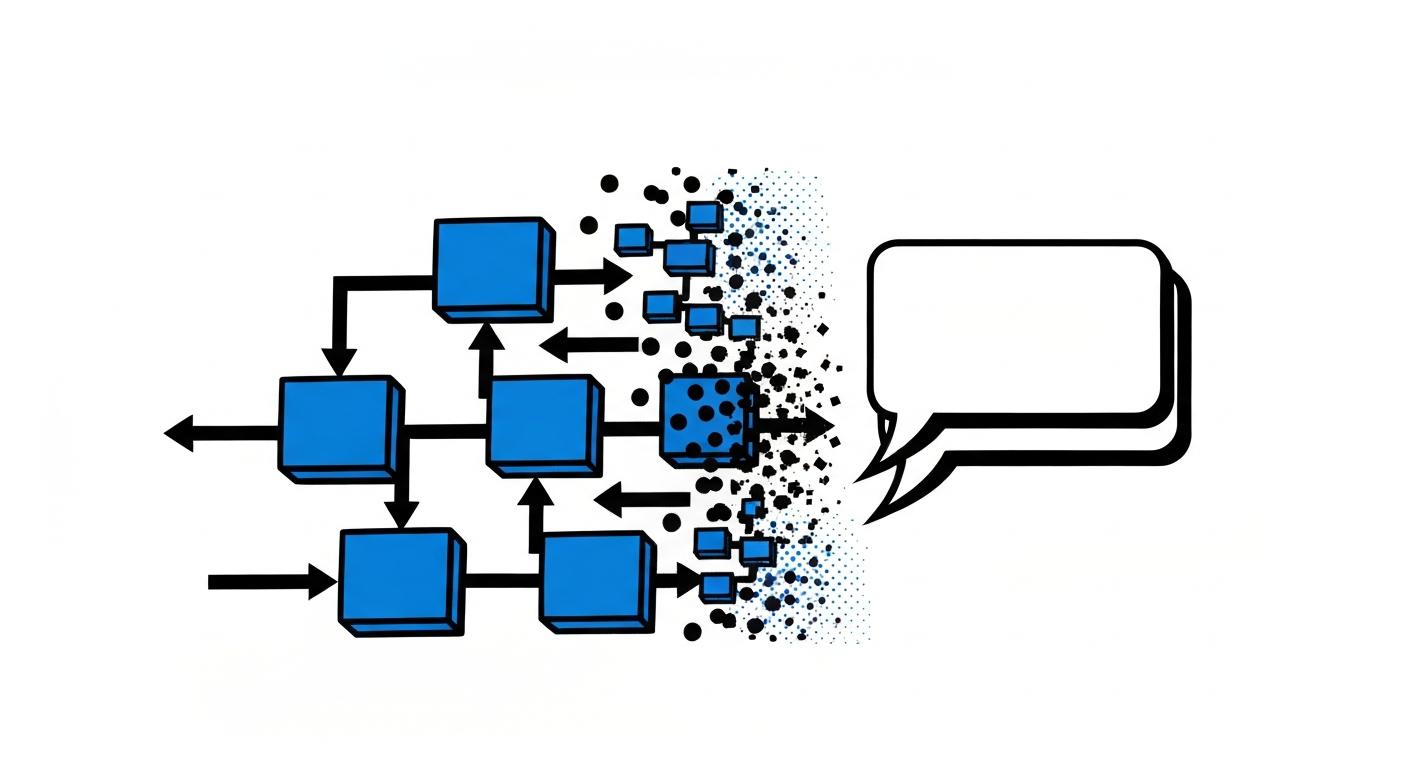
n8n and Make Finished Their Job
2026-03-10
by Uri Walevski
n8n and Make were great products. They solved a real problem. Non-technical people needed to wire AI into their workflows, and visual node editors gave them a way to do it without writing code. Drag a trigger here, connect an LLM there, pipe the output to Slack. It worked.
But the thing they solved for is disappearing.
The whole point of a visual workflow builder was to make composition accessible. You couldn't write code, so you needed boxes and arrows. The AI was a black box you connected to other black boxes. The diagram was the program.
That made sense when AI could only do what you explicitly told it to do. You had to decompose your task into steps, pick the right nodes, configure each one, handle the branching logic yourself. The AI was powerful but dumb. It needed you to be the architect.
That's not where we are anymore.
The Machine Changes Everything
Claude Code, and tools like it, represent a different paradigm. You don't give the AI a diagram. You give it a machine. A terminal, a filesystem, network access, the ability to install packages and run code. Then you describe what you want in plain language.
The AI figures out the steps itself. It writes the code, runs it, checks the output, fixes errors, iterates. You're not composing nodes. You're talking to a programmer.
This is strictly more powerful than a visual workflow. A diagram can only express what the node library supports. Code can express anything. Need to parse a weird CSV format, hit an API that doesn't have a pre-built integration, do some math on the results, and format the output in a specific way? In n8n you'd need a custom function node for half of that and you're back to writing code anyway, except now it's inside a tiny text box in a browser.
With a coding agent you just say what you want. The agent writes whatever code is needed. No node library limitations, no awkward workarounds, no "code node" escape hatches.
The Last Objection
There's one reasonable pushback. "I don't want to set up a terminal environment. I don't want to install Claude Code. I don't have a dev machine. I just want to describe what I need and have it happen."
Fair. And that's exactly the gap that matters now.
The progression for non-coders has been: depend on a programmer to build everything, then use n8n/Make to compose AI yourself, and now, use AI as your own free programmer. Each step removed a dependency. The first removed the need for a programmer for simple automations. The second is about to remove the need for the visual builder itself.
But you still need somewhere for that AI programmer to work. It needs a machine, tools, credentials, a place to run code. Setting that up is its own technical hurdle.
A Cloud Coding Agent
prompt2bot is that place. You describe what you want the agent to do. It gets a real VM with a coding agent inside it. The agent can install packages, clone repos, call APIs, run scripts, whatever the task requires.
The credentials problem is solved too. Your agent needs API keys to do real work, but you can't just hand them over. We built an architecture where the agent never sees the actual secret values. They're encrypted and injected at the network level only for approved hosts. Even if the agent makes a mistake or gets prompt-injected, the credentials can't leak. I wrote about how this works here.
You don't need a local dev environment. You don't need to understand terminals or package managers. You talk to your agent through WhatsApp, Telegram, or the web. It does the technical work on its VM. You get the results.
What This Means for n8n and Make
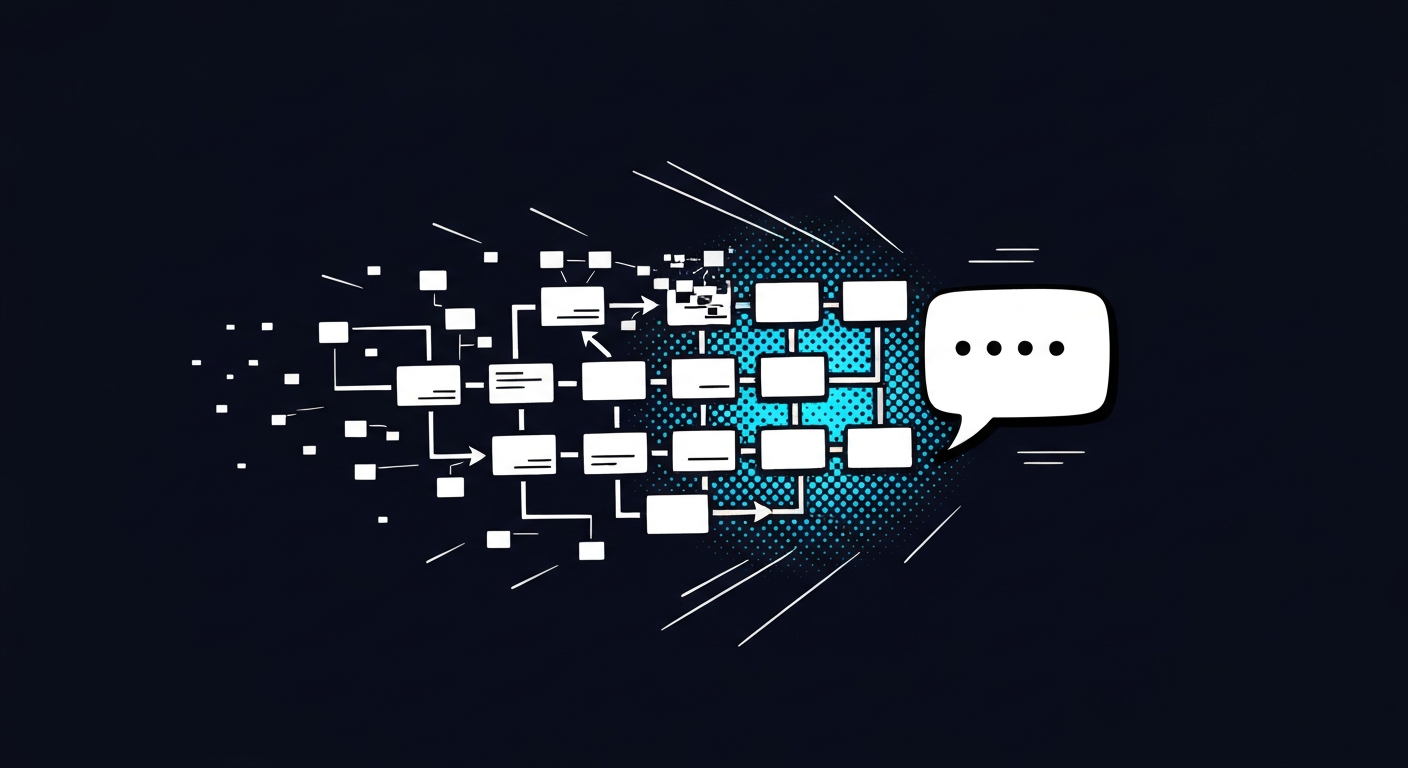
They're not bad products. They served their purpose well. But their purpose was bridging a gap that's closing. The gap between "I know what I want" and "I can make it happen" used to require either a programmer or a visual builder. Now it requires a conversation.
Visual workflow builders will stick around for a while, the way that many technologies outlive the era that needed them most. But the trajectory is clear. The next generation of non-coders won't learn to drag nodes. They'll just talk to an agent that codes for them.
← All posts