 prompt2bot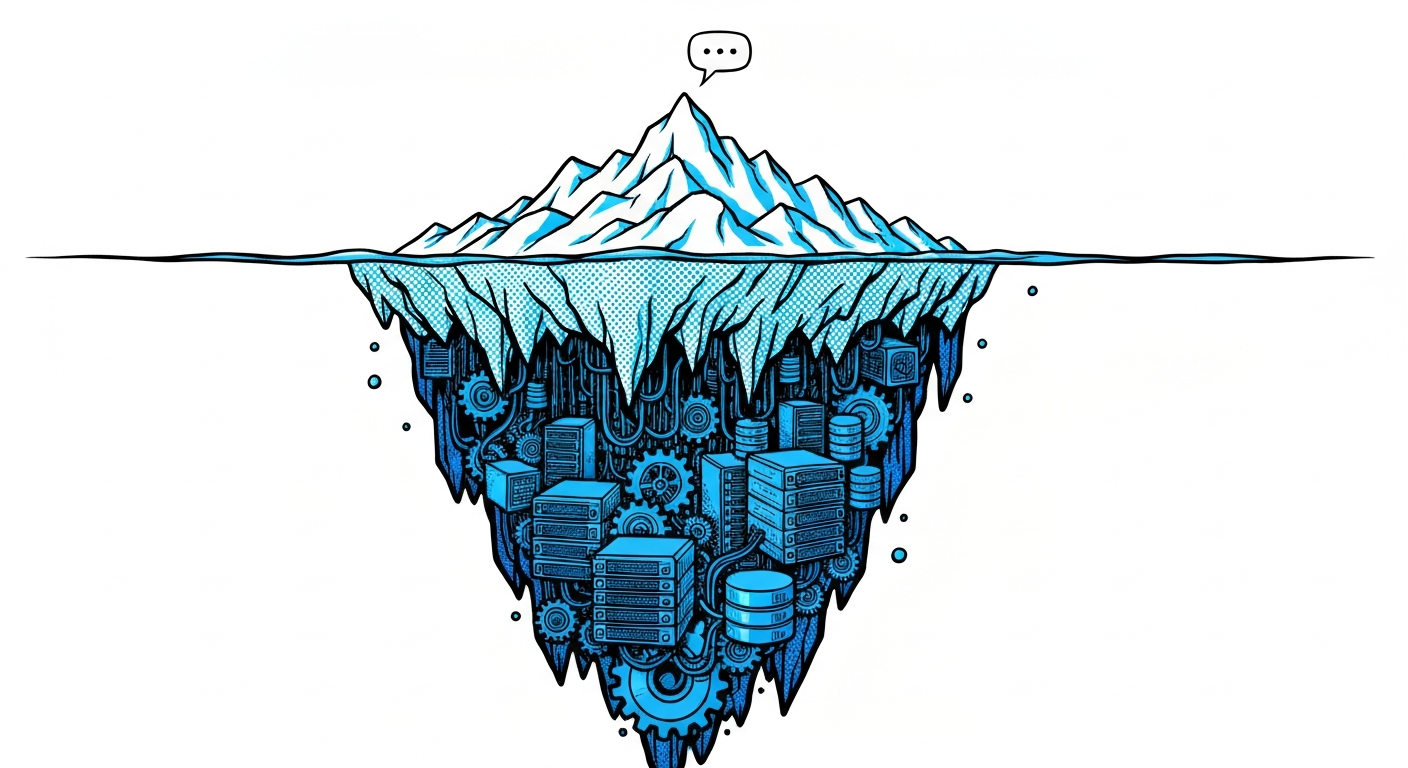

Use prompt2bot as Your Startup's Frontend
2026-03-23
by Uri Walevski
The "build vs. buy" dilemma is ever-present in the age of vibe-coding, and AI agents are no exception. If you're technical, building an AI agent yourself is a fun weekend project. You can write a script, set up a Telegram webhook, wire up a few tool calls, and deploy it. Or you can grab a great open-source framework like OpenClaw or Hermes and spin it up on your own server.
In some specialized cases, building your own custom infrastructure makes complete sense. But for most applications, since the underlying agent plumbing is identical across completely different use cases, reinventing the wheel is rarely the best use of your engineering time.
The initial demo usually takes just a day or two. But taking that agent from a cool prototype to a reliable service that runs consistently for paying users introduces a lot of quiet complexity.
The TL;DR is that using a platform like prompt2bot for prototyping carries zero lock-in risk. Your only investment is the natural language prompt and the API tool schemas—two things you would have to write anyway for any custom agent. Because the entire agent setup on prompt2bot is built purely around these open definitions, you can launch your prototype instantly with no lock-in. For getting a prototype off the ground, there is really no reason not to do it.
The iceberg
Getting a basic chatbot to respond is a great start, but it's only the visible tip of the iceberg. Below the surface lies a substantial amount of implementation detail. Even assuming vibe-coding with frontier models, there is still a long runway of edge cases and integration plumbing to work through.
Here are some examples of things you'd need at some point:
-
Chat infra. If you're not working via existing channels like WhatsApp or Telegram, you'd need some kind of chat solution. This is far more than a simple input box. A production chat interface should support streaming responses so users aren't left waiting, along with typing indicators, read receipts, and real-time state synchronization across tabs. You also need to render markdown, code blocks, and images correctly, manage connections over WebSockets or Server-Sent Events (SSE) that degrade gracefully on spotty networks, and support infinite scrolling, file sharing, voice messages, and emoji reactions. Building a secure, end-to-end encrypted transport layer that achieves feature parity with modern messaging apps took us about a year of iteration, and we are still refining it. (Our open-source solution: Alice & Bot).
-
The agent harness. You can skip a few steps here by using existing harnesses, but building a reliable runtime harness takes a long runway of iteration to get right. Each LLM API has its own peculiarities and rate limits. For any non-trivial use case, you have to build native support for subagents and multi-turn threads. Beyond the orchestration code, you need to research and implement mechanisms like anti-hallucination guardrails and context compaction (summarizing past messages so you don't blow your token limits). You also need to supervise the model's loops to prevent it from getting stuck calling tools repeatedly or falling into weird quirks (like Gemini flooding the chat with emojis).
-
Secret shielding and injection protection. Agents need access to API keys to run tools, but exposing those keys in the system prompt or local environment is a massive security risk. Designing a secure architecture where the agent can execute authenticated API requests without ever seeing or leaking the raw secret values is a challenging security engineering problem. In addition, you have to implement robust guardrails against prompt injection.
-
Secure code sandboxing. If your agent needs to edit files or run code, it should do so inside a secure sandbox. Setting up isolated virtual environments or Docker containers, managing execution timeouts, and cleaning up resources requires some careful infrastructure setup.
-
File storage and RAG. Building a retrieval-augmented generation (RAG) system so the bot can search and answer questions based on spreadsheets or long documents requires parsing, chunking, embedding generation, and vector retrieval.
-
Elasticity and scale. in harnesses such as openclaw and hermes, you can't scale too easily because the agent sits on a container. A sudden spike of users might lead to denial of service. prompt2bot arhcitecutre invests heavily in being copmletely elastic, so we can scale up and down, thus preventing loss of resources. This is quite hard to get right because the same conversation might be handled in different servers. This means locking mecahnisms and state needs to be preserved across servers, in a performant way.
None of this is your moat
These infrastructure details are identical whether you're building a customer support bot, a task manager, or a specialized developer tool. The underlying plumbing of session management, transport, and secure sandboxing doesn't change across use cases.
Your unique value—and what users are paying for—is your domain expertise. It's the specific backend logic, the customized prompt instructions, and the way your system integrates with your business's proprietary APIs and databases.
We designed prompt2bot to handle the common platform infrastructure so you can focus entirely on your core product.
You write the prompt, define your custom tools, and build the backend endpoints. prompt2bot takes care of the WhatsApp sessions, voice transcription, file ingestion, VM orchestration, secure secret encryption, and user isolation.
Keeping your options open
A major benefit of this approach is that it is built on open standards. Your prompt is simply natural language, and your tools are defined as standard JSON schemas pointing to your own backend servers.
For instance, a tool definition in prompt2bot is a clean, standard schema format:
If you ever decide to self-host or transition to another agent framework, your core work travels with you. The prompts and tool specs aren't locked into a proprietary format.
Additionally, we believe in open source:
-
Alice & Bot: Our web chat infrastructure, Alice & Bot, is completely open-source. This includes the chat widget and the end-to-end encryption protocols. If you ever switch backends, you can keep your existing frontend interface and simply point the webhook to your new server.
-
The Harness: Our agent harness is open-source as well—you can find it at ai-utils.
The months of work we save you on chat infrastructure, you never need to redo. The days of work you put into your prompt and tools, you never lose.
Designing for the long term
Building a custom agent stack is highly doable for any experienced engineering team, but maintaining it over time is a continuous effort. Keeping up with new messaging channels, updating media decoders, handling security patches, and managing API changes can divert valuable engineering time away from your actual product features.
With prompt2bot, you can be up and running quickly with a reliable setup that handles WhatsApp, Telegram, and web chats, along with audio transcription, sandbox environments, and secure secrets out of the box.
Focusing engineering resources on your unique product features rather than the underlying chat infrastructure helps you iterate faster and deliver more value to your users.
← All posts